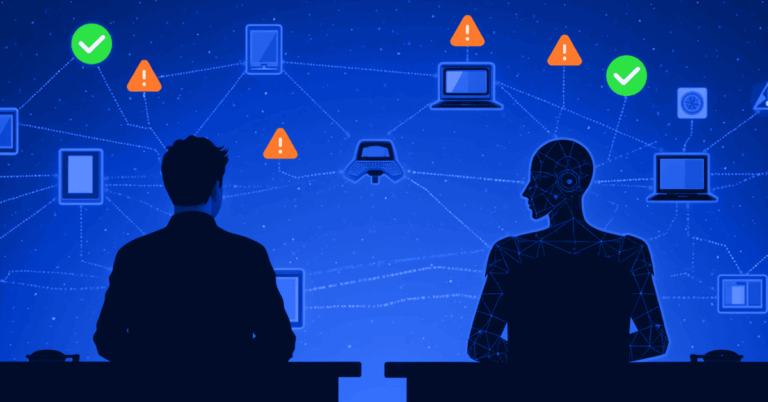
ServiceNow has long served as a central operational engine for IT, security, HR, customer service, and complex digital workflows across organizations. With the rapid emergence of agentic AI, the platform’s potential has expanded from basic automation and workflows into a powerful ecosystem of autonomous, reasoning-capable AI agents previously reserved for humans.
This evolution offers enormous opportunity but also raises security risks. As ServiceNow Agentic AI capabilities mature inside the platform, organizations must prioritize securing these agents as a critical component of their attack surface.
Why agentic AI changes the security landscape
The rising cost and impact of data breaches, the increasing complexity of enterprise environments, and the expanding attack surface created by AI-driven automation make this impossible to ignore. Data breaches today are more expensive and impactful.
Industry reports estimate the average cost of a data breach over four million dollars, with organizations in highly regulated industries experiencing even higher losses. What’s more worrisome, 89% of breached organizations believed they had “appropriate visibility” at the time of incident, according to AppOmni’s The State of SaaS Security Report. Business disruption, reputational damage, customer attrition, employee distrust, legal penalties, and the downstream operational consequences of compromised data compound the severity.
Layering agentic AI into this environment, without proper security controls, multiplies the risk significantly. AI agents can take action autonomously, interact with sensitive data, modify workflows, initiate integrations, and escalate their own access if misconfigured or exploited.
How agentic AI changes security and affects your team
ServiceNow agentic AI introduces autonomous decision-making and action execution. This expands an organization’s attack surface, possibly amplifying risks across every role responsible for governance, operations, and development.
Here is how each key persona that touches ServiceNow can be affected:
CISOs: Ensuring governance over autonomous actions
CISOs are responsible for safeguarding sensitive information across all systems, yet ServiceNow is already a high-value target due to its sheer volume and critical data. Agentic AI increases this potential risk because it introduces autonomous decision-making and action execution. A misaligned or compromised AI agent can inadvertently expose confidential data, modify configuration settings, or trigger unauthorized workflows at scale unknown to security and operational teams.
For the CISO, ensuring that agentic AI security is embedded into governance frameworks and risk mitigation strategies is non-negotiable. They must be able to demonstrate visibility, controls, and accountability over every AI-driven action inside the platform, otherwise regulatory compliance and enterprise security postures are immediately jeopardized.
VPs of Information Security: Operationalizing guardrails
While CISOs work on strategy, VPs of Information Security are responsible for operationalizing security controls, ensuring overall platform integrity, and guiding how AI interacts with the organization’s data ecosystem. They must ensure that guardrails exist to prevent unauthorized data access, misconfigured automations, and unintended configuration changes.
Agentic AI introduces risks that behave like static code; it learns, adapts, and can be influenced by both legitimate user inputs and malicious actors. Prompt injection, data poisoning, insecure workflows, and unintentionally permissive configurations are all risks that demand a proactive security model tailored specifically to agentic AI. Without prioritizing agentic AI security, the VP of InfoSec cannot reliably protect the organization from breaches originating from within its most central workflow platform.
SOC Analysts: Investigating AI-driven activities
SOC analysts rely on clear, traceable activity logs to detect anomalies, investigate incidents, and respond to threats. But agentic AI inside ServiceNow introduces ambiguity into these logs because AI-driven actions may appear valid or indistinguishable from legitimate user activity. ServiceNow is already the hub for many security workflows; a compromised AI agent within the platform could manipulate incident response processes, execute malicious prompts, alter security records, or mislead analysts with inaccurate data resulting in negative impacts.
SOC analysts need precise visibility into which actions were executed by humans and which were executed by AI. They require detection rules that identify unusual AI behavior, such as repeated queries for sensitive records, mass updates, or unexpected workflow changes. Without a strong agentic AI security posture, SOC analysts lose the ability to trust the data they rely on and become increasingly vulnerable to breaches hidden within AI-driven processes.
IT Managers: Balancing innovation with operational stability
IT managers experience a different set of pressures. While agentic AI promises easier workflows and new improvements through automated incident responses, streamlined change management, and accelerated service restoration, it also introduces uncertainty.
If an AI agent misinterprets instructions, it may trigger unintended workflow actions, escalate incidents improperly, make configuration changes that disrupt critical services, or it may alter CMDB entries. A single misaligned agentic AI action can create widespread operational disruption. IT Managers must therefore support the adoption of AI while enforcing strict oversight to ensure that autonomous actions do not put service reliability at risk.
IT managers must strike a balance between ensuring operational stability, service reliability, and platform uptime. A strong agentic AI security strategy allows IT Managers to embrace innovation without sacrificing stability or jeopardizing mission-critical systems.
ServiceNow Administrators: Maintaining control over autonomy
The rise of agentic AI represents both an opportunity and a challenge. ServiceNow administrators are responsible for platform health, access management, workflow integrity, and day-to-day configuration. Agentic AI amplifies their responsibilities because AI agents may attempt to modify workflows, update records, adjust ACLs, or interact with custom applications without explicit human oversight. If the administrators cannot see exactly what the AI is doing or restrict what it is allowed to do, the platform becomes unpredictable and difficult to manage.
Agentic AI security and visibility provides ServiceNow administrators the ability to enforce proper governance, ensuring that AI-driven actions remain within approved boundaries. It provides transparency into AI decision-making and creates accountability for autonomous actions. Without robust security controls, ServiceNow administrators risk losing control of the platform they are entrusted to manage.
ServiceNow Developers: Managing risks behind AI-driven development
Developers benefit from AI-powered development tools that accelerate coding, script creation, and autonomous workflow generation. But with increased productivity and speed come new risks. AI-generated logic may inadvertently contain security vulnerabilities, expose sensitive data through improper queries, or bypass established development standards.
Developers need confidence that AI-assisted development follows secure coding principles and that agentic AI within the platform cannot access or modify sensitive development assets without authorization. Agentic AI security frameworks help developers maintain the integrity of their applications, ensuring that AI-driven code enhancements and automation support rather than compromise security.
How AppOmni AgentGuard helps secure agentic AI in ServiceNow
The collective importance of agentic AI security across all these roles underscores one central truth: agentic AI inside ServiceNow is transformative, but only if implemented responsibly.
Without the proper controls, guardrails, monitoring, and governance, the same autonomous capabilities that drive efficiency can accelerate the spread of security vulnerabilities. Malicious actors are increasingly targeting AI systems, automation pipelines, and intelligent agents. To stay secure, organizations must be prepared not only to detect these threats, but to prevent them from taking root in the first place. Prevention and detection of data breaches within ServiceNow must evolve alongside the platform’s AI capabilities.
Traditional access controls and workflow-based governance are no longer sufficient. Organizations must adopt a holistic approach that includes visibility into AI actions, anomaly detection tailored to AI behavior, role-based restrictions for AI agents, and continuous monitoring for potential misuse.
As organizations evaluate solutions designed to secure this new era of AI-driven automation, AppOmni AgentGuard has emerged as a critical capability to help secure agentic AI agents inside ServiceNow. AgentGuard provides deep visibility into how AI agents interact with data, ensures that all AI-originated actions follow least-privilege principles, and prevents unauthorized access or workflow manipulation by continuously monitoring for unusual or risky AI behavior.
By enforcing strict guardrails around AI actions, validating least privilege permissions in real time, and offering comprehensive audit trails for every AI interaction, AppOmni AgentGuard enables enterprises to embrace AI without compromising data security, operational integrity, or compliance.
How’s your ServiceNow posture?
Join our experts as they walk through a practical framework to assess and improve the security posture of your ServiceNow tenant. Learn how to address common pitfalls that lead to data exposure or audit gaps.