
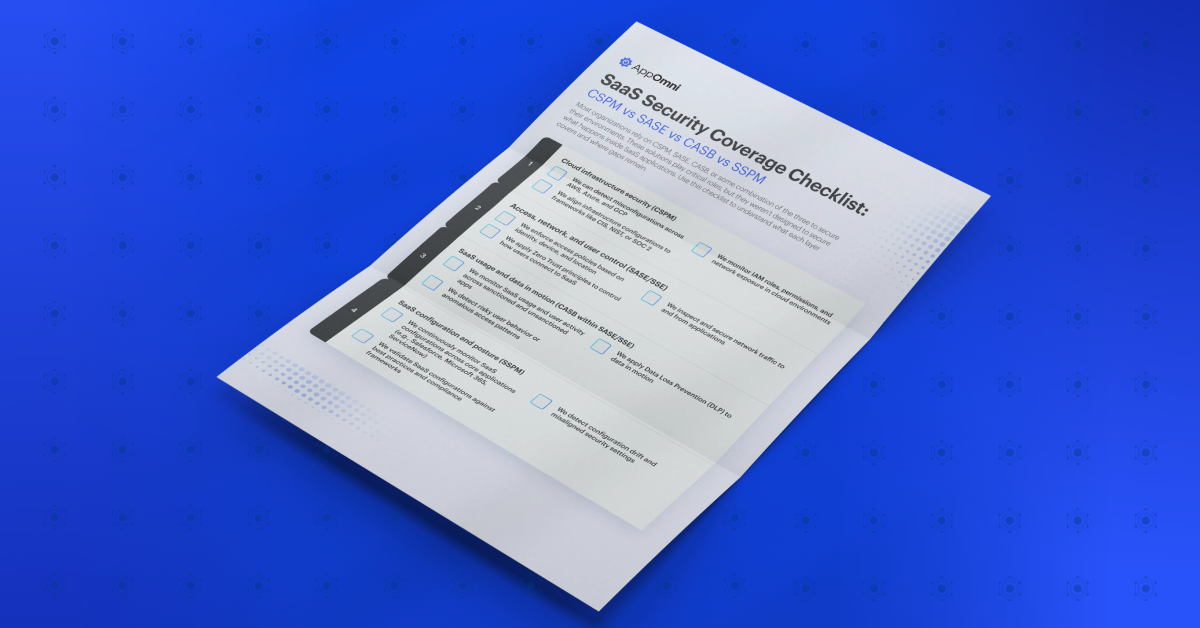
Most organizations rely on CSPM, SASE, CASB, or some combination of the three to secure their environments.
These tools are critical, but they weren’t designed to secure what happens inside SaaS applications.
This SaaS security coverage checklist breaks down what each layer actually covers and where critical risks are often missed without SSPM.
Download the Checklist
Your security stack wasn’t built for SaaS
Modern security tools each solve part of the problem:
- CSPM protects cloud infrastructure
- SASE/SSE governs access and traffic
- CASB monitors SaaS usage
But none of them fully address the biggest blind spot:
data exposure, misconfigurations, and access risks inside SaaS apps.
That’s where attackers (and accidental breaches) happen.


What happens inside SaaS is still largely unsecured without SSPM
SSPM (SaaS Security Posture Management) fills the gap left by traditional tools by providing visibility and control within SaaS applications themselves.
With SSPM, organizations can:
- Continuously monitor SaaS configurations and detect drift
- Understand user access, permissions, and identity risks
- Identify exposed or overshared sensitive data
- Gain visibility into third-party integrations and OAuth risk
- Track and reduce SaaS risk over time with continuous monitoring
Without this layer, critical exposures often go undetected.
Most security gaps exist inside SaaS
Security teams often assume their existing tools provide full coverage, but in reality:
- Infrastructure is secured
- Access is controlled
- Activity is monitored
Yet misconfigurations, overprivileged users, and exposed data inside SaaS remain unaddressed. This creates a false sense of security and introduces more risk.


Do you have complete SaaS security coverage?
Download the full SaaS security coverage checklist to evaluate your current stack and uncover hidden gaps across CSPM, SASE, CASB, and SSPM.