
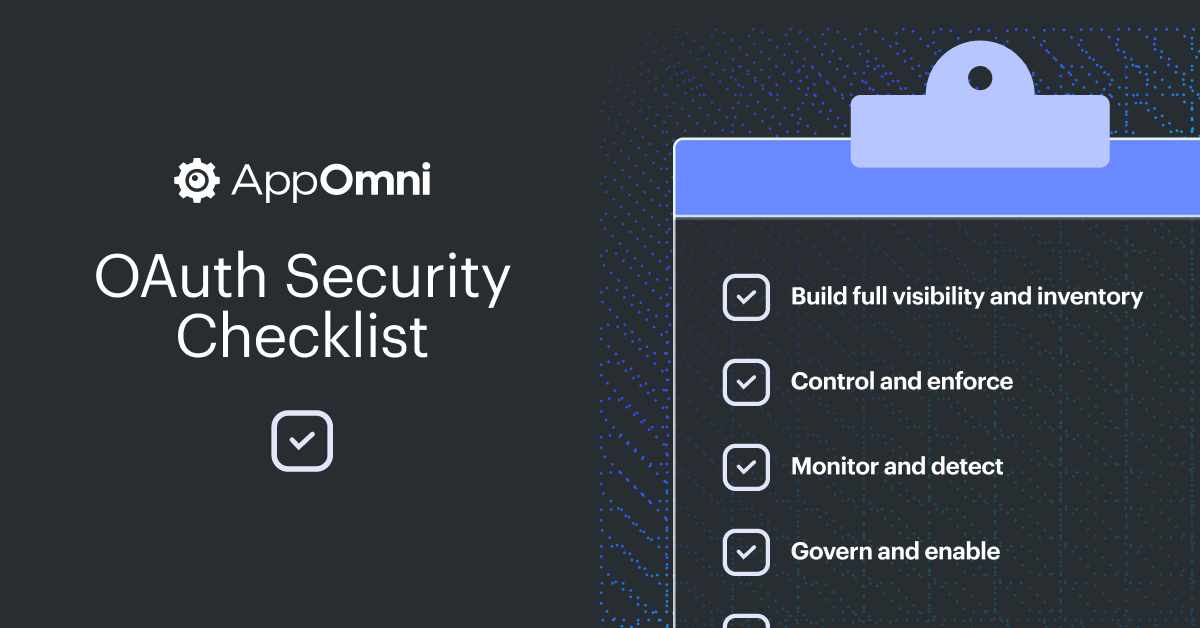
Reduce SaaS risk. Control third-party access. Stop token-based attacks.
Modern SaaS apps rely on OAuth to connect users, data, and third-party integrations, but every new connection is a potential risk. Get instant access to our OAuth Security Checklist and learn best practices to:
- Gain visibility: See every OAuth token, app, and integration in your SaaS estate.
- Enforce least privilege: Limit permissions and prevent privilege creep, and keep risky tokens in check.
- Automate offboarding: Remove stale and risky tokens with integrated workflows.
- Detect threats fast: Surface shadow IT, overprivileged apps, and catch unusual activity before it escalates.
- Empower your team: Equip users and admins to make safer choices and block unauthorized access.
Ready to take control? Download your free checklist and get practical steps to secure OAuth tokens, protect SaaS data, and manage third-party risk today.
Download Your Free Checklist
Frequently asked questions about OAuth
What is OAuth security, and why does it matter?
OAuth security focuses on protecting the tokens and permissions that allow applications to access SaaS data. Because tokens can grant persistent access without requiring credentials, they are a common target for attackers and must be continuously monitored and controlled.
What are the biggest risks associated with OAuth tokens?
The most common risks include overprivileged tokens, unused or stale access, unapproved third-party integrations, and misconfigurations such as non-expiring tokens or insecure redirect URIs.
How do you secure OAuth tokens effectively?
A strong approach includes maintaining a complete inventory of tokens, enforcing least privilege access, monitoring usage for anomalies, and implementing governance controls for third-party applications.
How does OAuth relate to SaaS security?
OAuth is a key part of SaaS-to-SaaS connectivity. Without proper oversight, it can introduce visibility gaps and expand the attack surface through connected applications and integrations.
Can traditional security tools detect OAuth-based threats?
Many traditional tools focus on network or endpoint activity and may miss OAuth-specific risks. Effective detection requires visibility into SaaS configurations, identity context, and token behavior within applications.
How often should OAuth access be reviewed?
OAuth access should be reviewed continuously, with regular audits to validate permissions, remove unused tokens, and ensure policies remain aligned with security requirements.